Heimish invitations are full of short Hebrew abbreviations: ב"ה at the top, אי"ה before the date, נ"י after a name. They save space and they sound right to every guest, but it is easy to put one in the wrong place. This guide lists the ones you will see most, what each stands for, and where it belongs on the card.
The most common abbreviations
| Abbreviation | Stands for | Where it goes |
|---|---|---|
| ב"ה / בס"ד | Baruch Hashem / B'siyata d'Shmaya | Written at the top of the card. |
| בעזהשי"ת | B'ezras Hashem Yisborach | "With the help of Hashem"; a common opening. |
| אי"ה | Im yirtzeh Hashem | "If Hashem wills"; before the date: שתתקיים אי"ה. |
| למז"ט | L'mazel tov | "For good fortune"; after the birth: הולדת בננו למז"ט. |
| נ"י | Nero yair | After a boy's or chosson's name. |
| ני"ו | Nero yair v'yizrach | Another form used after a young man's name. |
| הי"ו | Hashem yishmerehu v'yechayehu | After a grown man's name, often the parents or grandparents. |
| שי' | Sheyichye | After a living person's name. |
| תחי' | Tichye | After a girl's or woman's name. |
| שליט"א | Sheyichye l'orech yamim tovim amen | After a rav or rebbe's name. |
| ז"ל / ע"ה | Zichrono livracha / Alav hashalom | After the name of someone who has passed away. |
| עב"ג | Im bas gilo | "With his match"; joins the chosson and kallah on a tenoyim card. |
| שב"ק | Shabbos kodesh | The holy Shabbos: ביום שב"ק. |
| פר' / פרשת | Parshas | The week's parsha. |
| לפ"ק | Lifrat katan | After the Hebrew year, e.g. תשפ"ז לפ"ק. |
| ביהמ"ד | Beis hamedrash | The shul or study hall. |
| המצפים לקבל פניכם בשמחה | Hamtzapim l'kabel peneichem b'simcha | "Looking forward to greeting you joyfully"; above the signature. |
Titles after names
Which abbreviation goes after a name depends on who the person is. A baby boy, a bar mitzvah boy or a chosson gets נ"י. A grown man, such as a father or grandfather, usually gets הי"ו or שי'. A girl or woman gets תחי'. A rav gets שליט"א. Someone who has passed away gets ז"ל or ע"ה. Communities have their own customs, so follow what your family uses.
The date line
A typical date line reads: שתתקיים אי"ה ביום ג' פרשת לך לך, ט' חשון תשפ"ז לפ"ק, בשעה 8:00 בערב. The parts are: אי"ה, the day of the week as a Hebrew letter (א' for Sunday through ו' for Friday, שב"ק for Shabbos), the parsha, the Hebrew date, the year with לפ"ק, and the time.
Days of the week
| Day | Hebrew | English |
|---|---|---|
| Sunday | יום א' | Yom Rishon |
| Monday | יום ב' | Yom Sheni |
| Tuesday | יום ג' | Yom Shlishi |
| Wednesday | יום ד' | Yom Revi'i |
| Thursday | יום ה' | Yom Chamishi |
| Friday | יום ו' / ערש"ק | Erev Shabbos |
| Shabbos | שב"ק | Shabbos Kodesh |
| Motzei Shabbos | מוצש"ק | Motzei Shabbos Kodesh |
Quotation marks: ״ or "
In Hebrew abbreviations the mark before the last letter is a gershayim (״), and a single mark after one letter is a geresh (׳). On a phone keyboard most people type the ordinary " and ', and on an invitation either looks fine. Our designs show whichever you type.
JPG or PDF: which file do you need?
After you pay you get three files, each for a different job. The Small – for texting JPG is under 1 MB, so it goes through on WhatsApp and on picture messages (MMS) without turning blurry; many phone carriers limit picture messages to about that size. The Full quality JPG is 2550 px wide at 300 dpi, sharp enough to print at home. The PDF is print-ready at letter size and holds one flat image, so the print looks exactly like the preview. If you only send the card on phones, the small JPG is all you need; if you are going to a printer, bring the PDF.
| Use | Best file | Why |
|---|---|---|
| WhatsApp, text message (MMS) | Small JPG for texting | Under 1 MB, opens fast, stays sharp |
| Small JPG (or the PDF) | Small file, opens on any phone | |
| Print a few copies at home | Full quality JPG or PDF | 300 dpi, prints sharp |
| Printer or copy shop | Exact letter page size | |
| Shul notice board | Print once, pin it up | |
| Animated card (designs that have one) | GIF or small GIF | Moves when it opens on a phone |
Making your invitation on a phone, step by step
- Open the site and tap your simcha, for example Sholom Zucher or Tenoyim.
- Tap the design you like. The card appears on top, the form underneath.
- Type the details. The card updates as you type, so you can see exactly where each line falls.
- Tap the order button under the card, then pay.
- After paying, download your three files: the PDF, the full-quality JPG and the small JPG for texting.
Make it now
Every design on MazelTovInvite has the right heading built in, so you only type names, dates and places. See the live preview, then pay $15 and download a print PDF, a full-quality JPG and a small JPG for texting.
A bigger list: abbreviations you will see on invitations
The table above has the abbreviations that appear on almost every card. Below is a longer list for the titles, dates, places and blessings that come up on bar mitzvah, tenoyim, kiddush and baby boy invitations. Each one has its full form, what it means in plain English, and an example of how it looks on a card.
| Abbreviation | Full form | Meaning | Example on a card |
|---|---|---|---|
| בשעטו"מ | בשעה טובה ומוצלחת | In a good and successful hour | Engagements and tenoyim: אשר תתקיים אי"ה בשעטו"מ |
| מז"ט | מזל טוב | Mazel tov | Heading or opening: מז"ט לרגל הולדת בננו |
| השי"ת / להשי"ת | השם יתברך / להשם יתברך | Hashem, blessed be He | Opening line: בשבח והודיה להשי"ת |
| בעז"ה | בעזרת השם | With the help of Hashem | A shorter opening, like בעזהשי"ת |
| ב"ב | בני ביתו | His household | Inviting the whole family: את כבודו ואת ב"ב שיחיו |
| ה"ה | הלא הוא | "That is" | Before the main name: ה"ה החתן בר מצוה |
| הב' | הבחור | The young man | Before a bochur's name: הב' ______ נ"י |
| הר"ר | הרב רבי | The rav, Reb | A formal title before a man's name |
| הרה"ח | הרב החסיד | The chassidishe man | Before a father's or grandfather's name: הרה"ח ר' ______ הי"ו |
| הרה"ג | הרב הגאון | The great rav | Before the name of a rav or talmid chochom |
| מו"ה | מורנו הרב | Our teacher, the rav | A formal title, often for grandfathers: מו"ה ______ |
| מוהר"ר | מורנו הרב רבי | Our teacher, the rav, Reb | A very formal title, mostly for rabbonim |
| בהרה"ח | בן הרב החסיד | Son of | After the boy's or chosson's name: ______ נ"י בהרה"ח ר' ______ הי"ו |
| כ"ק | כבוד קדושת | His holiness | Before a rebbe's title: כ"ק אדמו"ר שליט"א |
| אדמו"ר | אדוננו מורנו ורבנו | Our master, teacher and rebbe | The rebbe's title |
| לאוי"ט | לאורך ימים טובים | For long, good days | A blessing after a living elder: שיחי' לאוי"ט |
| יבלחט"א | יבדלו לחיים טובים ארוכים | May they be set apart for long, good life | Said of the living when a deceased relative is named in the same line |
| זצ"ל | זכר צדיק לברכה | May the memory of the tzaddik be a blessing | After the name of a tzaddik or rav who has passed away |
| זצוקללה"ה | זכר צדיק וקדוש לברכה לחיי העולם הבא | The fuller form of זצ"ל | After the name of a great tzaddik or rebbe of earlier generations |
| ע"ה | עליו / עליה השלום | Peace be upon him / her | After a man's or woman's name who has passed away |
| נ"ע | נשמתו עדן | His soul is in Gan Eden | After the name of someone who has passed away; some families prefer it |
| הכ"מ | הריני כפרת משכבו | I am an atonement for his resting place | Written by a son or daughter after a parent's name in the first year after the passing |
| ר"ח | ראש חודש | Rosh Chodesh | In the date: ביום ר"ח כסלו |
| חוה"מ | חול המועד | Chol Hamoed | For a simcha on Chol Hamoed: ביום ב' דחוה"מ סוכות |
| ער"ש / ערש"ק | ערב שבת / ערב שבת קודש | Erev Shabbos | Friday: ביום ערש"ק פרשת ______ |
| מוצש"ק | מוצאי שבת קודש | Motzei Shabbos | Saturday night: במוצש"ק פרשת ______ |
| ליל | ליל / לילה | The night of | An evening event: ליל ה' לסדר ______ |
| אחה"צ | אחר הצהרים | In the afternoon | For a daytime kiddush or seudah: בשעה 4:00 אחה"צ |
| אחה"ת | אחר התפלה | After davening | For a kiddush in shul: בשב"ק אחה"ת |
| ביהכנ"ס | בית הכנסת | The shul | For the place: בביהכנ"ס ______ |
| ת"ת | תלמוד תורה | Talmud Torah (boys' school) | In a hall or school name |
| רח' | רחוב | Street | In the address: רח' ______ מס' ______ |
| מס' | מספר | Number | The house or building number |
| עיה"ק | עיר הקודש | The holy city | Before Yerushalayim: עיה"ק ירושלים ת"ו |
| ת"ו | תבנה ותכונן | May it be built and established | After Yerushalayim |
| יע"א | יגן עליה אלקים | May Hashem protect it | After the name of a town or city |
| ע"י | על ידי | By | "Made by", or a kiddush hosted by a family: ע"י משפחת ______ |
| לרגל | — | In honor of | Not an abbreviation, but on almost every kiddush card: לרגל הולדת בתנו |
How to read the Hebrew year
The year on an invitation is written in letters, and every letter is a number: ת is 400, ש is 300, פ is 80 and ז is 7. Together תשפ"ז is 787, and the thousands (5,000) are left out, so it means the year 5787. That is why לפ"ק (lifrat katan, "by the small count") comes after it: it tells the reader that the thousands were skipped. The gershayim (״) always goes before the last letter: תשפ"ז, not תש"פז. Some families write שנת תשפ"ז לפ"ק, and others just תשפ"ז. Both are fine.
Writing the day of the month
The Hebrew day of the month is written in letters too. Most are simple, but two need care, the 15th and the 16th:
| Day of month | Written as | Note |
|---|---|---|
| 1–10 | א' ב' ג' ... י' | One letter with a geresh. |
| 11–14 | י"א י"ב י"ג י"ד | |
| 15 | ט"ו | Never י"ה, out of respect for Hashem's name. |
| 16 | ט"ז | Never י"ו, for the same reason. |
| 17–19 | י"ז י"ח י"ט | |
| 20 | כ' | |
| 21–29 | כ"א ... כ"ט | |
| 30 | ל' | Only in months that have 30 days. |
The Hebrew months
Here are the months as they are usually spelled on a heimish invitation:
| Month | Hebrew | Note |
|---|---|---|
| Tishrei | תשרי | |
| Cheshvan | מרחשון / חשון | Both spellings are common; מרחשון is the formal one. |
| Kislev | כסלו | |
| Teves | טבת | |
| Shevat | שבט | |
| Adar | אדר / אדר א' / אדר ב' | In a leap year write which Adar. |
| Nissan | ניסן | |
| Iyar | אייר | |
| Sivan | סיון | |
| Tammuz | תמוז | |
| Av | מנחם אב / אב | Many families write מנחם אב. |
| Elul | אלול |
Which abbreviations go on which simcha
- Sholom Zucher and Vachnacht: ב"ה, למז"ט (after the birth), לרגל הולדת בננו, שב"ק / ליל שב"ק, פרשת, the father's name with הי"ו.
- Pidyon Haben: ב"ה, בננו הבכור נ"י, the day, parsha, Hebrew date and לפ"ק, בשעה, often אחה"צ or בערב.
- Kiddush: לרגל, שב"ק, אחה"ת (after davening), ביהכנ"ס or ביהמ"ד, ע"י משפחת.
- Bar Mitzvah: ה"ה החתן בר מצוה, נ"י, בהרה"ח, הרה"ח ר' … הי"ו, וזוגתו תחי', לסדר, לפ"ק.
- Tenoyim: צאצאינו, עב"ג, נ"י and תחי', בשעטו"מ, בת / בהרה"ח, זקני החתן / זקני הכלה.
Names of relatives who have passed away
When a grandparent who has passed away is named on a card, the abbreviation after the name shows it: ז"ל, ע"ה or נ"ע are the most common, and זצ"ל is used for a rav or tzaddik. When living and departed relatives are listed together, some families add יבלחט"א after the names of the living, to set them apart. A son or daughter in the first year after a parent's passing may write הכ"מ. These customs differ from family to family; if you are unsure, ask the person whose parent it is, and write it the way they do.
Common mistakes with abbreviations
- הי"ו after a boy. A baby, bar mitzvah boy or chosson gets נ"י; הי"ו is for grown men.
- תחי' missing after the mother. If the father has הי"ו, write the mother with תחי' too.
- י"ה or י"ו for the 15th and 16th. Always ט"ו and ט"ז.
- The gershayim in the wrong place. It goes before the last letter: אי"ה, not א"יה.
- ב"ה and בס"ד together. Choose one for the top of the card.
- לפ"ק without the year. It belongs right after the year, not on its own line.
- Mixing styles. If one grandfather is הרה"ח, write the other one the same way.
- Inventing new abbreviations. If you are not sure a short form is known, write the words out in full. Clear is better than short.
A quick checklist
- One opening at the top: ב"ה, בס"ד or בעזהשי"ת.
- Every name has the right ending: נ"י, הי"ו, תחי' or שליט"א.
- Titles before the names match across both families.
- The date line has the day, parsha, day of month, month, year and לפ"ק.
- The 15th and 16th are written ט"ו and ט"ז.
- The time is clear, and an evening event is on the right Hebrew day.
- Departed relatives have ז"ל or ע"ה, and the family agreed on how to write them.
- Someone else read the card once before it was sent.
On MazelTovInvite you type each line yourself and see it on the design as you go, so you can check every abbreviation in the live preview. You can also choose a font for each line. When it looks right, you pay $15 and get three files: a print PDF, a full-quality JPG and a small JPG for texting. On designs that have an animated GIF version, you can add the GIF for a small extra.
A full card, abbreviation by abbreviation
Here is a short bar mitzvah card with the abbreviations in place, followed by what each one is doing there:
בשבח והודיה להשי"ת
הננו מתכבדים להזמין את כבודו ואת ב"ב שיחיו
לשמחת הבר מצוה של בננו
ה"ה החתן בר מצוה ______ נ"י
שתתקיים אי"ה ביום ג' לסדר לך לך, ט' מרחשון תשפ"ז לפ"ק
בשעה 7:30 בערב באולם ______, רח' ______
ההורים: הרה"ח ר' ______ הי"ו וזוגתו תחי'
בס"ד opens the card. להשי"ת thanks Hashem. ב"ב שיחיו invites the guest's whole household. ה"ה introduces the boy, and נ"י follows his name. אי"ה comes before the date, ג' is Tuesday, לסדר names the week by its parsha, and לפ"ק follows the year. רח' is the street. In the signature, הרה"ח ר' comes before the father's name, הי"ו after it, and תחי' after the mother.
Related guides
- Sholom Zucher invitation wording
- Vachnacht invitation wording
- Tenoyim invitation wording
- Kiddush invitation wording
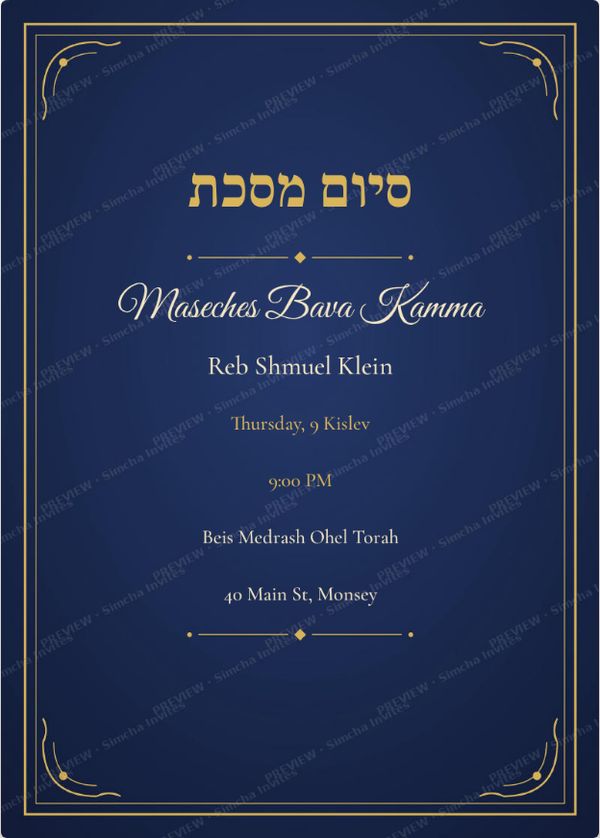
More abbreviations, with their meaning and where they go
These are less common than the ones above, but you will see them on chassidish and yeshivish cards, and on cards for a siyum or a hachnosas sefer Torah. The last column says where each one usually goes.
| Abbreviation | Full form | Meaning | Where it goes |
|---|---|---|---|
| בעה"י | בעזרת השם יתברך | With Hashem's help | At the very top, instead of ב"ה or בס"ד |
| ת"ל | תודה לאל | Thanks to Hashem | Opening line of thanks |
| ש"פ | שבת פרשת | Shabbos of the parsha | Date line: ש"פ וירא |
| ער"ח | ערב ראש חודש | The day before Rosh Chodesh | Date line |
| שתחי' | שתחיה | May she live | After a girl's or woman's name |
| יצ"ו | ישמרהו צורו ויחיהו | May Hashem guard him and give him life | After a man's name, in some families' style |
| הר"ר | הרב רבי | Rabbi | Before a man's name; more formal than ר' |
| הרה"ג | הרב הגאון | The great rabbi | Before a rav's name |
| הרה"צ | הרב הצדיק | The righteous rabbi | Before a rebbe's or tzaddik's name |
| הגה"צ | הגאון הצדיק | The righteous gaon | Before the name of a great rav |
| הרה"ק | הרב הקדוש | The holy rabbi | Before a tzaddik who has passed away, in family lines |
| זי"ע | זכותו יגן עלינו | May his merit protect us | After the name of a tzaddik who has passed away |
| הבה"ח | הבחור החשוב | The fine young man | Before a chosson's or bochur's name |
| ק"ק | קהל קדוש | Holy congregation | Before a kehilla's name, in the shul line |
| משפ' | משפחת | The family of | Hosts' or signature line |
| הנ"ל | הנזכר לעיל | Mentioned above | A later line about the same place or person |
| לע"נ | לעילוי נשמת | For the elevation of the soul of | Siyum card, before the name the learning is for |
| ס"ת | ספר תורה | Sefer Torah | Hachnosas Sefer Torah card: הכנסת ס"ת |
| ש"ס | ששה סדרים | The six orders: the whole Talmud | Siyum HaShas card |
Titles like הרה"ק and זי"ע are only for someone who has passed away, and הרה"ג or הגה"צ only for a rav the family calls by that title. When in doubt, use the simpler הרה"ח or ר', and ask the family.
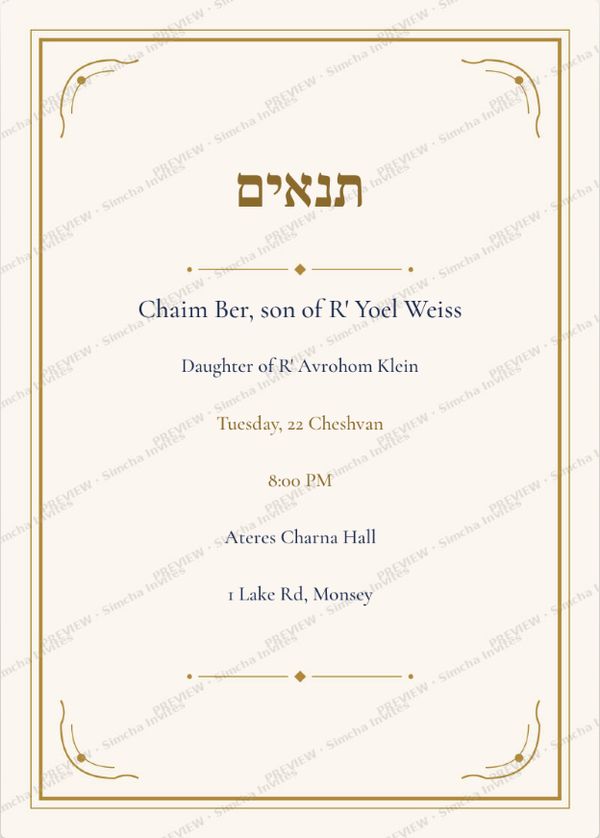
See the abbreviations in full sample cards
Each of our wording guides shows these abbreviations on complete cards. For a chasuna card, see our chasuna invitation wording guide; for the baby-boy simchas, our bris invitation wording guide; and for the "night belongs to the next day" rule in practice, our guide on when to send simcha invitations.
Frequently asked questions
What does נ"י mean after a name?
Nero yair, "may his light shine". It is written after the name of a boy or a chosson.
What does לפ"ק mean?
Lifrat katan. It is written after the Hebrew year, for example תשפ"ז לפ"ק.
What does עב"ג mean?
עם בת גילו, "with his match". It joins the chosson's and the kallah's names on a tenoyim or engagement card.
Why is the 15th written ט"ו and not י"ה?
Because י and ה together spell one of Hashem's names, so the 15th is written ט"ו (9+6) and the 16th ט"ז (9+7).
What is the difference between הי"ו and שליט"א?
הי"ו is written after the name of a grown man, such as a father or grandfather. שליט"א is written after the name of a rav or rebbe.
What does יבלחט"א mean?
יבדלו לחיים טובים ארוכים, "may they be set apart for long, good life". It is written after the names of living relatives when a relative who has passed away is named in the same line.
What does בהרה"ח mean?
בן הרב החסיד, "son of". It comes after a boy's or chosson's name, before his father's name.
What is the difference between שתחי' and תחי'?
Both mean "may she live" and both are correct after a girl's or woman's name. Use the one your family uses.
What does ש"פ mean in a date line?
It stands for שבת פרשת, the Shabbos of a given parsha, as in ש"פ וירא.
Can I use זי"ע for a grandfather?
It is used for a tzaddik or rebbe who has passed away. For a grandfather, most families write ז"ל or ע"ה.